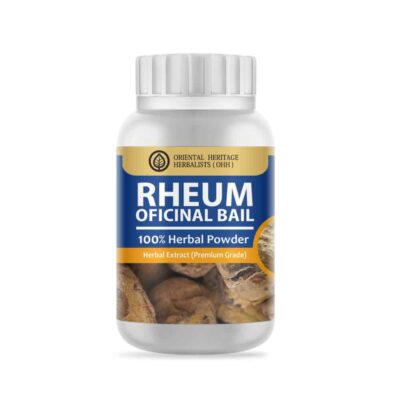
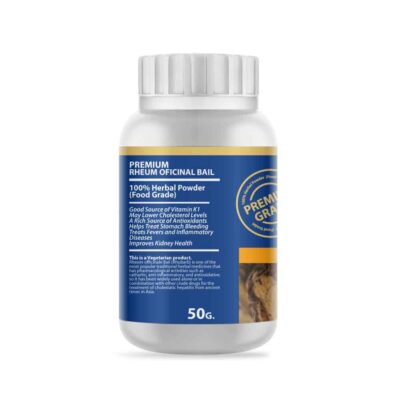
Rheum officinale Bail., commonly known as Chinese rhubarb or Medicinal rhubarb, has been one of the most powerful and respected herbs in Traditional Chinese Medicine (TCM) for thousands of years. Unlike the culinary rhubarb used in desserts, this species is prized for its roots, which possess strong medicinal properties.
Today, Rheum officinale continues to be widely used in herbal supplements focusing on detoxification, gut health, liver support, and inflammation management. Its rich phytochemical profile makes it a key ingredient in natural wellness formulations across the globe.
Botanical Overview
- Scientific name: Rheum officinale Bail.
- Common names: Chinese Rhubarb, Da Huang (大黄)
- Family: Polygonaceae
- Plant part used: Dried root and rhizome
This herb is cultivated across China, Tibet, and parts of East Asia, and remains a cornerstone of traditional herbal medicine.
Active Compounds in Rheum officinale
The root is rich in potent phytochemicals, including:
- Anthraquinones (emodin, aloe-emodin, rhein)
- Tannins
- Flavonoids
- Sennosides
- Phenolic compounds
These compounds contribute to its unique combination of cleansing, anti-inflammatory, antimicrobial, and digestive-supporting properties.
Traditional Uses of Rheum officinale
In Chinese, Tibetan, and Ayurvedic medicine, Rheum officinale has been traditionally used for:
Digestive Cleansing & Relief From Constipation
Known for its natural laxative effects, the root is often used to promote healthy bowel movements and relieve occasional constipation.
Liver Detoxification
It supports liver function by aiding toxin elimination and improving digestion.
Reducing Heat & Inflammation
TCM practitioners use it to clear “excess heat,” helping calm internal inflammation.
Wound Healing & Antimicrobial Support
Topical preparations made from the root help cleanse wounds and support healing.
Supporting Healthy Blood Circulation
Its compounds may help improve blood flow and support overall vitality.
Modern Health Benefits of Rheum officinale
1. Natural Laxative and Digestive Support
The anthraquinones in rhubarb act as gentle, plant-based laxatives that:
- Stimulate peristalsis
- Improve bowel regularity
- Support gut motility
This makes it a popular ingredient in digestive and detox supplements.
2. Liver Detoxification & Cleansing
Its natural compounds help:
- Promote liver detoxification
- Support bile flow
- Reduce accumulation of metabolic waste
This is why many detox formulations include Rheum officinale as a key ingredient.
3. Anti-Inflammatory Properties
Emodin and related compounds exhibit strong anti-inflammatory effects, supporting the management of:
- Mild joint discomfort
- Digestive inflammation
- General inflammatory processes
4. Antioxidant and Antimicrobial Activity
The herb offers protection against free radicals and contains natural antimicrobial properties that help maintain digestive and immune health.
5. Potential Metabolic and Weight Management Support
Some studies suggest rhubarb extracts may help regulate:
- Fat metabolism
- Glucose management
- Intestinal health
Making it useful in weight-supporting herbal formulations.
Applications in Modern Supplements and Herbal Products
Today, Rheum officinale is widely used in:
1. Digestive and Detox Supplements
Often combined with other botanicals like senna, ginger, or probiotics.
2. Liver Health Formulas
Supports liver function and detoxification pathways.
3. Traditional Herbal Tinctures
Used in small doses to promote bowel regularity.
4. Topical Herbal Ointments
Applied for antimicrobial and healing support in natural skincare.
5. Functional Herbal Teas
A key ingredient in cleansing teas and digestive blends.
Safety Notes
Because of its strong active compounds, Rheum officinale should be used:
- In moderate, controlled doses
- Under guidance if used long-term
- Avoided by pregnant women unless advised by a professional
Manufacturers must ensure proper extraction and standardization to maintain safety and effectiveness.
Sustainability
As demand for medicinal rhubarb increases, responsible cultivation is essential. Many herbal suppliers now support sustainable farming and conservation to protect wild populations.
Conclusion
Rheum officinale Bail. is one of the oldest and most respected medicinal roots in Eastern herbal traditions. Its powerful benefits, ranging from digestive support and detoxification to anti-inflammatory and antioxidant protection, make it a valuable ingredient in modern wellness products.
With proper formulation, this ancient herb continues to offer natural solutions for cleansing, digestive health, and overall well-being.
Explore our website to learn more: Click Here
Related Products
Related Post
Enkleia thorelii Is Gaining Attention in Southeast Asian Vitality Products
Rheum officinale Bail., commonly known as Chinese rhubarb or Medicinal rhubarb, has.
- 9 January 2026
- 0 Comments
From Farm to Formula: How Momordica charantia Is Used in
Rheum officinale Bail., commonly known as Chinese rhubarb or Medicinal rhubarb, has.
- 8 January 2026
- 0 Comments
Salacia chinensis: A Traditional Medicinal Plant for Metabolic Wellness
Rheum officinale Bail., commonly known as Chinese rhubarb or Medicinal rhubarb, has.
- 24 December 2025
- 0 Comments
Hesperethusa crenulata: A Traditional Herbal Plant with Emerging Wellness Potential
Rheum officinale Bail., commonly known as Chinese rhubarb or Medicinal rhubarb, has.
- 22 December 2025
- 0 Comments
Piper Species Comparison: Piper nigrum vs Piper longum vs Piper
Rheum officinale Bail., commonly known as Chinese rhubarb or Medicinal rhubarb, has.
- 19 December 2025
- 0 Comments


