
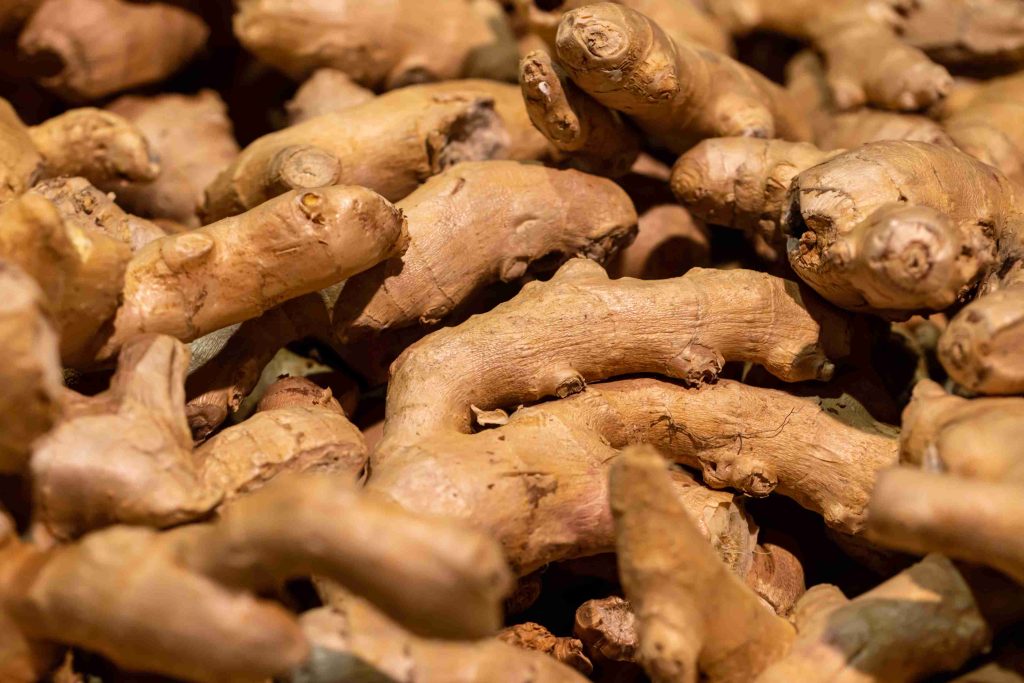
Kaempferia galanga and Kaempferia parviflora are closely related plants in the Zingiberaceae family, but they are not interchangeable ingredients. Both are traditional Southeast Asian botanicals with aromatic rhizomes, yet their characteristic compounds and modern formulation interests differ substantially. Kaempferia galanga is commonly known as aromatic ginger or kencur, while Kaempferia parviflora is widely known in Thailand as Krachaidam or black ginger. Scientific reviews describe different dominant phytochemical groups in the two species, making correct botanical identification particularly important when developing standardized extracts.
Kaempferia galanga: Aromatic and Versatile Botanical Applications
Kaempferia galanga has a long history of traditional use and culinary application across South and Southeast Asia. Its rhizomes are highly aromatic and contain a diverse range of compounds, including esters, terpenoids, flavonoids, phenolic compounds, and other constituents.
One of its best-characterized constituents is ethyl p-methoxycinnamate, which is frequently identified as a major bioactive compound in K. galanga rhizomes. Other reported constituents include ethyl cinnamate, kaempferol, and kaempferide.
This chemical profile makes K. galanga particularly interesting for aromatic herbal preparations, traditional wellness products, functional botanical blends, and formulations where its distinctive rhizome-derived phytochemicals are desired.
Kaempferia parviflora: A Methoxyflavone-Focused Botanical
Kaempferia parviflora, commonly called black ginger or Krachaidam, has a different characteristic phytochemical profile. Its rhizomes are particularly recognized for methoxyflavones, including 5,7-dimethoxyflavone and 5,7,4′-trimethoxyflavone.
This methoxyflavone-rich profile has made K. parviflora especially relevant to modern formulations focused on metabolic wellness, physical performance, circulation-related wellness, and other functional applications. Research has investigated a range of biological activities, although mechanisms and clinical applications continue to be studied.
For manufacturers, this means that a Kaempferia parviflora extract should generally be characterized according to its methoxyflavone content rather than substituted with a chemically different Kaempferia species.
Key Differences in Phytochemical Profiles
| Characteristic | Kaempferia galanga | Kaempferia parviflora |
|---|---|---|
| Common names | Kencur, aromatic ginger | Krachaidam, black ginger |
| Primary formulation interest | Aromatic botanical and traditional wellness applications | Functional wellness and methoxyflavone-focused formulations |
| Characteristic compounds | Ethyl p-methoxycinnamate, ethyl cinnamate, flavonoids and other constituents | Methoxyflavones including 5,7-dimethoxyflavone and 5,7,4′-trimethoxyflavone |
| Extract characterization | Can focus on relevant esters and broader phytochemical composition | Often characterized by specific methoxyflavone markers |
| Formulation positioning | Traditional herbal, aromatic, functional and botanical products | Performance, metabolic and broader functional wellness products |
How Their Formulation Applications Differ
The most important distinction is not simply the plant name but the chemical profile that the manufacturer wants to deliver. K. galanga can be selected when its characteristic aromatic compounds and broader phytochemical profile fit the formulation concept. K. parviflora is more appropriate when the product requires a methoxyflavone-rich botanical ingredient.
Choose Kaempferia galanga When the Formula Prioritizes
- Aromatic rhizome characteristics.
- Traditional Southeast Asian botanical applications.
- Ethyl p-methoxycinnamate and related constituents.
- Functional food, herbal, cosmetic, or wellness concepts.
- Broad phytochemical diversity.
Choose Kaempferia parviflora When the Formula Prioritizes
- Methoxyflavone-rich extracts.
- Black ginger or Krachaidam positioning.
- Functional wellness and performance-oriented concepts.
- Standardization around characteristic methoxyflavone markers.
- Research-backed interest in metabolic and vascular wellness applications.
Why Correct Botanical Identification Matters
Using the wrong Kaempferia species can result in a significant difference in phytochemical composition. Research on K. parviflora has demonstrated substantial variation in flavonoid profiles among samples from different origins, highlighting the importance of quality control and quantitative analysis.
Similarly, reviews of K. galanga identify numerous compounds across different chemical classes, reinforcing the need for proper botanical authentication and characterization when developing standardized extracts.
Species identification is the foundation of botanical formulation: the same genus does not guarantee the same active-compound profile.
Standardization and Quality Control
For premium botanical products, standardized extraction provides a practical way to control ingredient consistency. In K. parviflora, analytical methods have been developed to quantify characteristic methoxyflavones and evaluate variation between raw-material samples.
For K. galanga, quality assessment can likewise focus on authenticated plant material and relevant marker compounds such as ethyl p-methoxycinnamate, depending on the intended extract specification. Recent research continues to examine extraction and purification approaches for this compound.
Manufacturers should therefore establish specifications appropriate to the species, extraction method, intended application, and desired phytochemical markers.
Selecting the Right Kaempferia Extract for Product Development
When choosing between Kaempferia galanga vs Kaempferia parviflora, formulators should begin with the product’s intended positioning and then work backward toward the appropriate botanical profile.
K. galanga is a strong candidate for formulations where aromatic characteristics, traditional herbal applications, and its distinctive ester-rich chemistry are important. K. parviflora is better suited to formulations built around its characteristic methoxyflavones and the growing body of research surrounding black ginger.
This species-specific approach allows manufacturers to create more precise product concepts while avoiding confusion between botanicals that share a genus but have different chemical identities.
Explore Premium Botanical Extract Ingredients
Oriental Heritage Herbalists provides botanical extract solutions for manufacturers and formulators developing functional wellness, herbal, and nutraceutical products with carefully selected plant ingredients.
Explore Herbal Extract Products