
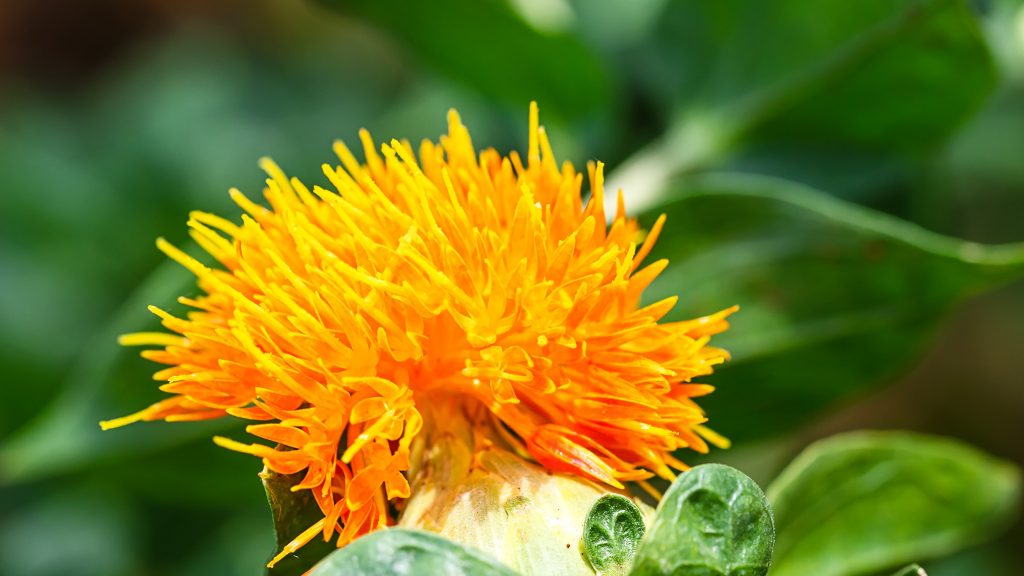
Carthamus tinctorius, widely known as safflower, is a brightly colored flowering herb with deep historical roots in Asia, the Middle East, and Africa. Traditionally used as a natural dye, health-supporting herb, and nourishing oil source, safflower continues to stand out in modern industries for its rich pigment, beneficial fatty acids, and antioxidant compounds.
Today, Carthamus tinctorius is a versatile ingredient across the cosmetic, nutraceutical, food, and natural colorant sectors, making it a valuable botanical for brands seeking plant-based innovation.
Understanding Carthamus tinctorius
The flowers and seeds of safflower are rich in:
- Carthamin pigments (natural red and yellow dyes)
- Linoleic acid (omega-6 fatty acid)
- Oleic acid
- Flavonoids
- Phenolic antioxidants
- Vitamins and plant sterols
These constituents make safflower suitable for modern clean-label formulations.
Benefits of Carthamus tinctorius
1. A Rich Natural Antioxidant Source
Safflower petals contain flavonoids and phenolic compounds that help protect the skin and body from oxidative stress. This makes them ideal for:
- anti-aging skincare products
- revitalizing serums
- soothing botanical creams
- wellness supplements focused on oxidative balance
2. Skin-Nourishing Benefits in Cosmetics
Safflower seed oil is highly valued for its lightweight texture and nutrient composition. It is commonly used for:
- moisturizers for dry or sensitive skin
- facial oils
- body care products
- natural soaps
- scalp and hair-conditioning formulas
High linoleic acid content helps support the skin barrier and hydration.
3. Natural Colorant for Food and Cosmetics
Safflower flowers have been used for centuries as a plant-based dye, producing vibrant shades of yellow, orange, and red.
- natural coloring agents in food and beverages
- herbal teas and infusions
- natural makeup products (lip tints, blushes)
- colored soaps and bath products
Its clean-label appeal makes it especially popular in natural and organic formulations.
4. Traditional Wellness Support in Supplements
In herbal practices, Carthamus tinctorius has long been associated with circulation-supporting and general wellness roles. Modern supplements may use safflower extract for:
- antioxidant blends
- vitality tonics
- herbal wellness formulas
- women’s health traditional remedies
Its flower and seed extracts are versatile and easy to incorporate into capsules, teas, and liquid herbal supplements.
5. Culinary and Nutritional Applications
Safflower oil is widely used as a cooking oil prized for:
- high linoleic or high oleic concentrations (depending on variety)
- neutral flavor
- suitability for dressings and health-focused food products
Safflower petals are also used in herbal teas and natural food coloring.
Modern Industrial Applications
1. Cosmetic & Personal Care Industry
Safflower oil and extract are found in:
- serums and facial oils
- hydrating creams
- body lotions
- herbal soaps
- natural hair care products
- bath and spa formulas
The combination of antioxidants and fatty acids supports skin nourishment.
2. Supplement & Herbal Wellness Industry
Standardized safflower extracts are used in:
- antioxidant capsules
- women’s wellness formulas
- liquid herbal tonics
- activity recovery supplements
- multi-herb functional blends
3. Food & Beverage Industry
Safflower’s mild flavor and vibrant pigment make it ideal for:
- cooking oils
- natural food colorants
- herbal teas
- wellness beverages
- plant-based culinary products
Its natural coloring ability makes it a preferred alternative to artificial dyes.
4. Natural Textile & Dye Industry
The pigment from the flowers is used for:
- dyeing natural fibers
- eco-friendly textile production
- craft coloring
This continues a centuries-old tradition.
Why Carthamus tinctorius Is Growing in Popularity
Across industries, safflower’s appeal continues to rise due to:
- clean-label, plant-derived properties
- multipurpose functionality
- rich antioxidant profile
- demand for natural dyes and botanical oils
- compatibility with health and beauty products
It is a sustainable and versatile botanical with strong traditional heritage and modern relevance.
Conclusion
Carthamus tinctorius is a vibrant and multifunctional herb that bridges tradition and innovation. From natural pigments and nourishing seed oil to antioxidant-rich extracts, safflower remains an important ingredient in cosmetics, supplements, and the natural food industry.
Brands seeking botanical authenticity and multifunctional plant ingredients can confidently rely on the unique properties of safflower.
Explore our website to learn more: Click Here