
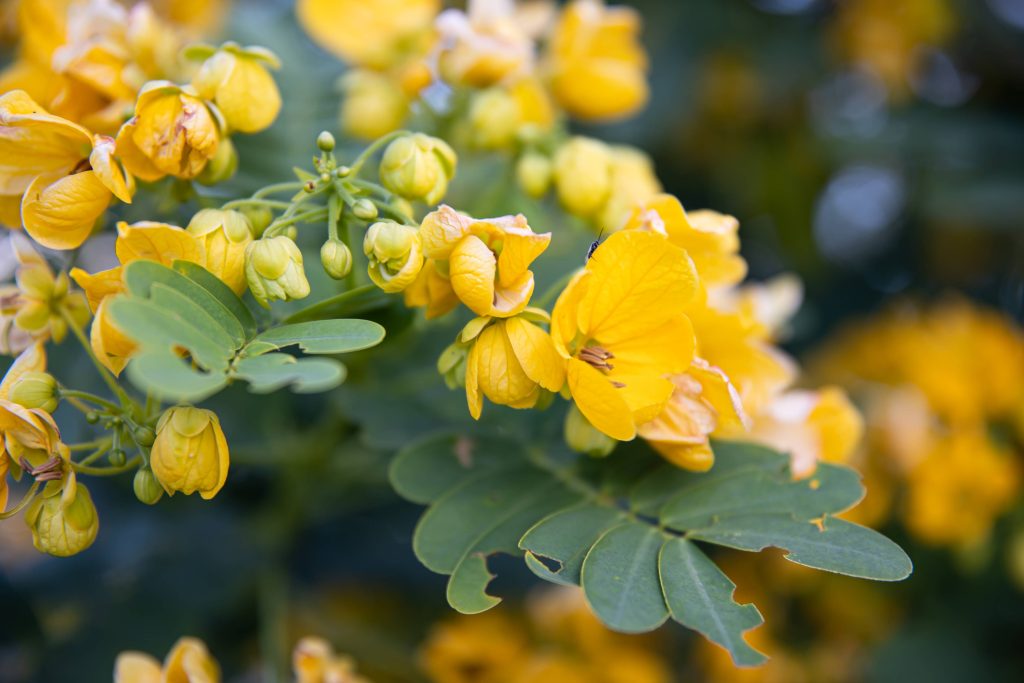
Senna siamea, also known as Siamese cassia, is a tropical tree native to Southeast Asia and parts of South Asia. For generations, local communities have valued this plant for its medicinal properties, culinary uses, and cultural significance. Today, Senna siamea continues to attract interest in the herbal industry for its role in traditional wellness formulations.
Botanical Overview
- Scientific name: Senna siamea (Lam.) Irwin & Barneby
- Family: Fabaceae
- Plant type: Evergreen tree
- Parts used: Leaves, bark, flowers
The tree is recognizable by its glossy green leaves and bright yellow flowers and is commonly cultivated in tropical regions.
Traditional Uses
Traditional healers have long used Senna siamea in various herbal preparations. In Southeast Asian folk medicine, people traditionally used the leaves and bark to:
- support digestive health
- promote detoxification
- support restful sleep
- relieve mild discomfort
In some cultures, young leaves are also cooked and consumed as a vegetable after proper preparation.
Key Bioactive Compounds
Senna siamea contains several phytochemicals, including:
- Anthraquinones
- Flavonoids
- Alkaloids
- Phenolic compounds
These constituents contribute to the plant’s biological activity and traditional applications.
Potential Health Benefits
1. Digestive Support
Traditional use highlights Senna siamea for supporting bowel regularity and digestive comfort when used responsibly.
2. Detoxification Support
Herbal practitioners have used the plant in cleansing formulations aimed at supporting the body’s natural detoxification processes.
3. Sleep and Relaxation
In some traditional practices, people prepared leaf infusions to promote relaxation and restful sleep.
4. Antioxidant Activity
The presence of flavonoids and phenolic compounds suggests antioxidant properties that help protect cells from oxidative stress.
Applications in Modern Herbal Industries
Dietary Supplements
Senna siamea extract appears in:
- traditional detox formulas
- digestive support supplements
- herbal wellness blends
Traditional Herbal Products
The plant remains widely used in:
- classical Southeast Asian herbal remedies
- botanical decoctions and tonics
Safety and Quality Considerations
Herbal practitioners emphasize proper processing and controlled dosage, as certain compounds in this herb can be potent. Responsible manufacturers follow quality standards to ensure safety and consistency.
Sustainability and Ethical Sourcing
Cultivators often grow Senna siamea as a managed crop, which helps reduce pressure on wild populations. Ethical sourcing and sustainable harvesting practices support long-term availability.
Conclusion
Senna siamea represents an important part of Southeast Asia’s herbal heritage. Its long history of traditional use, combined with its diverse phytochemical profile, makes it a valuable botanical for modern herbal wellness products.
As interest in traditional medicinal plants continues to grow, It remains a relevant and respected ingredient in natural health formulations.
Explore our website to learn more: Click Here