
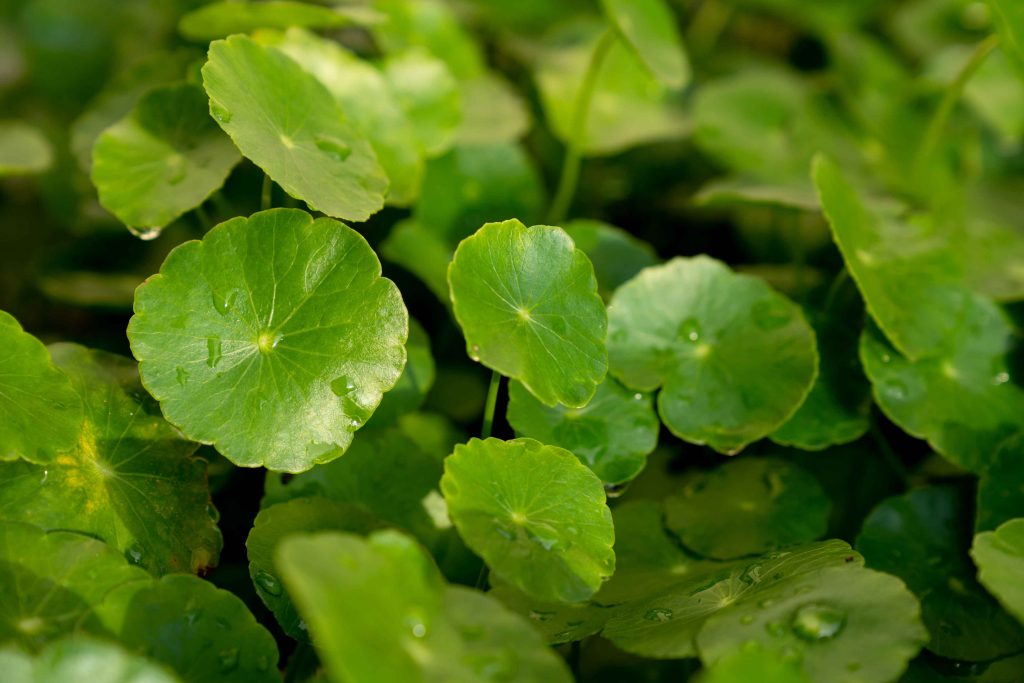
Centella asiatica, commonly known as gotu kola, has a long history of topical use across Asia, where traditional practitioners applied it to support skin recovery and overall skin condition. In recent decades, skin-care researchers and cosmetic chemists have brought this botanical into the laboratory, transforming it into one of the most widely studied plant ingredients in modern cosmetic science. Today, Centella asiatica plays a central role in research-driven skin-care development, with applications extending from wound-inspired care to sophisticated anti-aging and barrier-support products.
Traditional Background and Entry into Skin Science
Historically, communities used Centella asiatica leaves in poultices, washes, and herbal preparations applied to the skin. These practices positioned the plant as a botanical associated with skin comfort, repair, and long-term maintenance.
As interest in botanical actives grew, researchers began isolating and studying compounds from Centella asiatica, leading to its integration into modern dermatological research and cosmetic formulation.
From Plant Material to Cosmetic-Grade Extract
Manufacturers process Centella asiatica leaves through controlled drying and extraction methods to concentrate naturally occurring compounds such as triterpenoids, flavonoids, and polyphenols.
Cosmetic suppliers typically offer Centella asiatica as:
- Water-based extracts for toners and gels
- Glycerin or butylene glycol extracts for emulsions
- Powdered extracts for masks and specialty products
These ingredient forms allow formulation scientists to incorporate Centella asiatica into a wide variety of skin-care systems while maintaining stability and performance.
Research-Driven Applications in Skin-Care
Skin-care laboratories use Centella asiatica across multiple product categories, reflecting its versatility and strong research interest.
Wound-inspired and skin recovery formulations
R&D teams frequently incorporate Centella asiatica into products positioned around skin comfort, post-procedure care, and barrier support. These formulations often target compromised, sensitive, or environmentally stressed skin.
Anti-aging and skin-resilience products
Centella asiatica appears widely in serums and creams developed to support skin texture, elasticity, and long-term appearance. Cosmetic researchers value its compatibility with peptides, hyaluronic acid, and botanical antioxidants.
Barrier-support and microbiome-friendly systems
Modern formulations increasingly emphasize skin barrier function. Developers integrate Centella asiatica into products designed to support moisture retention and overall skin balance.
Why R&D Teams Choose Centella asiatica
From a research and formulation standpoint, Centella asiatica offers several advantages:
- Strong documentation in cosmetic and dermatological literature
- Excellent compatibility with active and minimalist formulations
- Consumer recognition in global skin-care markets
- Flexibility across sensitive-skin, clinical-inspired, and anti-aging product lines
These factors make Centella asiatica a core botanical in both mass-market and premium skin-care development.
Sustainability and Raw Material Considerations
Producers typically harvest the aerial parts of the plant, allowing cultivation systems that support continuous regrowth. Responsible suppliers emphasize controlled farming, proper drying techniques, and traceability to ensure consistent quality and environmental responsibility.
Sustainable sourcing supports not only ecological protection but also the reproducibility required in cosmetic R&D.
Future Outlook in Skin-Care Innovation
As cosmetic research increasingly blends biotechnology, dermatology, and botanical science, Centella asiatica continues to serve as a bridge between traditional use and modern skin-care innovation. Its adaptability ensures ongoing relevance in advanced delivery systems, biomimetic formulations, and holistic beauty concepts.
Conclusion
Centella asiatica has evolved from a traditional topical herb into a globally recognized cosmetic research ingredient. Its integration into wound-inspired care, barrier-support systems, and anti-aging products highlights its importance in modern skin-care R&D.
For cosmetic brands and formulation scientists, Centella asiatica remains a cornerstone botanical that supports both scientific credibility and natural beauty positioning.
Explore our website to learn more: Click Here